


Helpful resources available for you
Access information about treatment, hear from a real patient who has been treated for LGSOC, and even share your own experience.
Hear Mary’s story
Listen to Mary describe her KRAS-mutated recurrent LGSOC treatment journey.
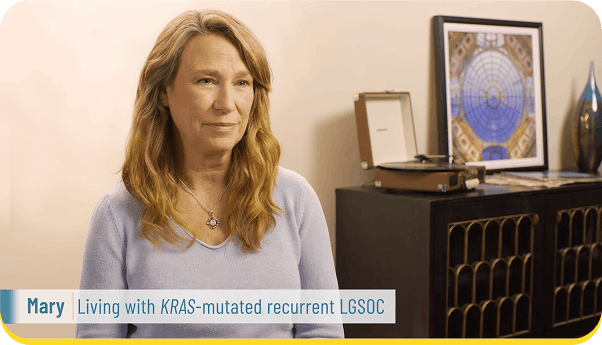
My journey with low-grade serous ovarian cancer, or LGSOC, began years before I was diagnosed.
— Mary

Share your story
Share the story of your treatment journey—it may provide support and inspiration to others taking Avmapki Fakzynja Co-Pack.
Support your treatment plan with these helpful tools
PATIENT BROCHURE
Find out what you need to know about treatment with Avmapki Fakzynja Co‑Pack.
DOSING & SIDE EFFECTS TRACKER
Use this resource to record your medical history, track treatment, log potential side effects, and discuss with your doctor.
TREATMENT EXPECTATIONS GUIDE
Find out what to expect before you begin treatment with Avmapki Fakzynja Co‑Pack.
SIDE EFFECTS INFORMATION CARD
Prepare for side effects and learn how you and your healthcare provider can manage and monitor them.
SHARE YOUR STORY
Share the story of your own treatment journey to help inform, support, and inspire others.

Recurso en español
Consulte aquí el folleto para pacientes en español.
FAQs
Find answers to your questions, from what a KRAS mutation is to how to take Avmapki Fakzynja Co-Pack.
Low-grade serous ovarian cancer (LGSOC) FAQs
LGSOC is a rare form of ovarian cancer that can take several years to diagnose, by which time it’s often at an advanced stage.
While LGSOC can affect women of many different ages, it’s most often diagnosed between the ages of 20 to 30 and 50 to 60.
Your healthcare provider will take a small sample of tissue from your tumor that another healthcare provider called a pathologist will then test to confirm an LGSOC diagnosis. They may also perform additional testing to detect changes and mutations in your body’s cells.
The KRAS gene mutation occurs in about 30% of LGSOC cases and is the most common type of mutation seen with LGSOC.
A mutation in the KRAS gene can lead to uncontrolled growth of cells and can contribute to the growth of a variety of cancers.
A KRAS mutation is usually diagnosed using a specific genetic test, which is performed by a healthcare provider called a pathologist.
Recurrence is when cancer comes back after treatment. Recurrence in LGSOC means the cancer has come back after previous treatment.
LGSOC can come back multiple times, which is known as a recurrence. In fact, over 80% of women with LGSOC experience a recurrence. Avmapki Fakzynja Co‑Pack is the first treatment specifically approved to treat women with KRAS-mutated recurrent LGSOC and who have been previously treated with medicine for their cancer.
Your doctor will monitor your health through regular checkups, which may include physical exams, discussions about any symptoms you’re experiencing, blood tests, and imaging tests.
Imaging tests, such as CT scans or MRIs, can help your care team see how your disease is responding to treatment and identify any changes over time, including whether new tumors have developed or existing tumors have grown
If you notice any new or worsening symptoms, or have concerns that your LGSOC may have changed, talk with your doctor.
For more information on symptoms of recurrence, visit the below resources:
General Avmapki Fakzynja Co‑Pack FAQs
Avmapki Fakzynja Co-Pack is the first FDA-approved prescription medicine used to treat adults who have LGSOC that has come back (recurrent), and have LGSOC with an abnormal KRAS gene, and were previously treated with medicine for their cancer. It is not known if Avmapki Fakzynja Co-Pack is safe and effective in children.
A mutation in the KRAS gene can contribute to the growth of cancer cells, but identifying KRAS mutations in tumors can help your doctor select a treatment that is targeted for KRAS-mutated cancer. Eligibility for treatment with Avmapki Fakzynja Co-Pack is determined based on your treatment history and mutation status. Asking your doctor about testing for a KRAS mutation as early as possible helps determine your treatment plan. If you have already been told that you have a KRAS mutation, talk to your doctor about Avmapki Fakzynja Co-Pack.
Avmapki Fakzynja Co‑Pack blocks multiple targets in 2 different pathways involved in the growth of LGSOC.
It’s important to tell your healthcare provider about all of your medical conditions, the prescription and over-the-counter medicines, vitamins, and herbal supplements you take, and if you are pregnant or plan to become pregnant.
Be sure to read the Patient Information for a full list of everything you should discuss with your healthcare provider before taking Avmapki Fakzynja Co‑Pack.
You should keep your Avmapki capsules and Fakzynja tablets in their original, child-resistant bottles and store them in the refrigerator between 36°F and 46°F (2°C to 8°C).
Always be sure to keep Avmapki Fakzynja Co‑Pack and all medicines out of the reach of children.
Yes, Verastem CaresTM is a support program here to help you access Avmapki Fakzynja Co‑Pack as prescribed by your healthcare provider. Regardless of what insurance you have, or if you have no insurance at all, Verastem CaresTM has programs to support you and will work with your healthcare provider to help you get access to treatment.
HAVE A QUESTION? WANT TO LEARN MORE?
Just call us. Our dedicated team is here to help.
Phone: 866-351-8372
8AM to 8PM ET Monday – Friday
Dosing FAQs
Each cycle consists of 3 weeks of treatment with 1 week off. Avmapki should be taken twice a week (in the mornings on Day 1 and Day 4), while Fakzynja should be taken twice a day every day. It’s important to follow this dosing schedule.
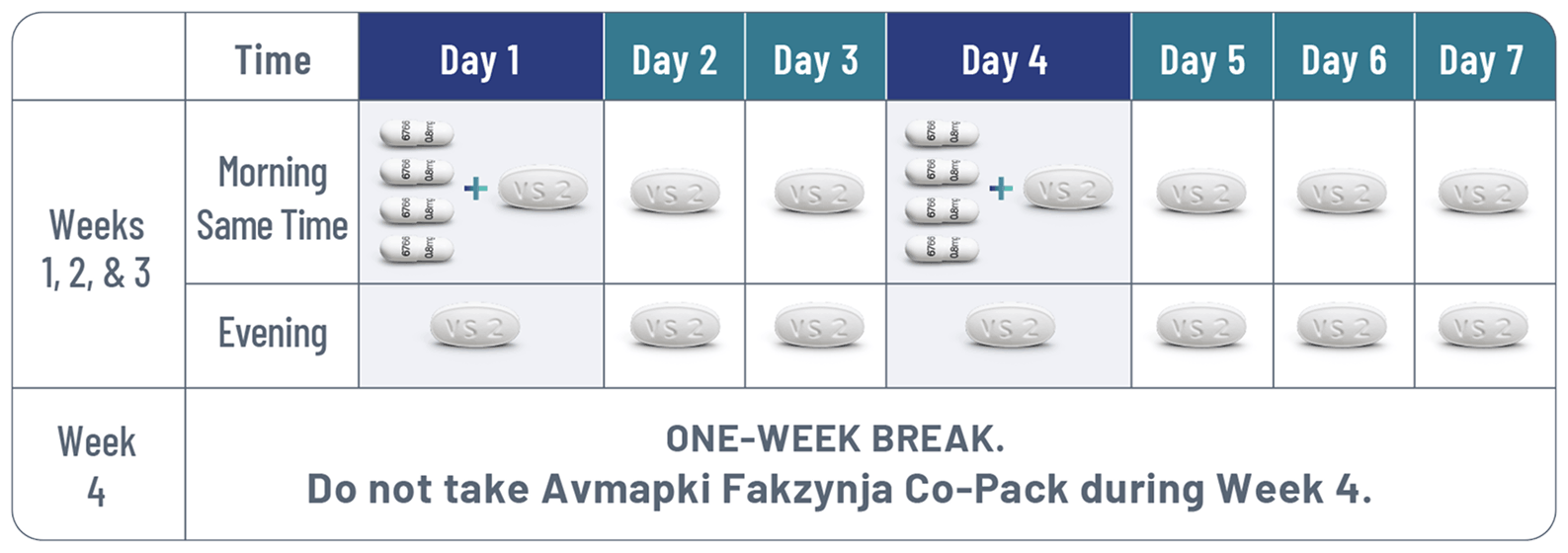
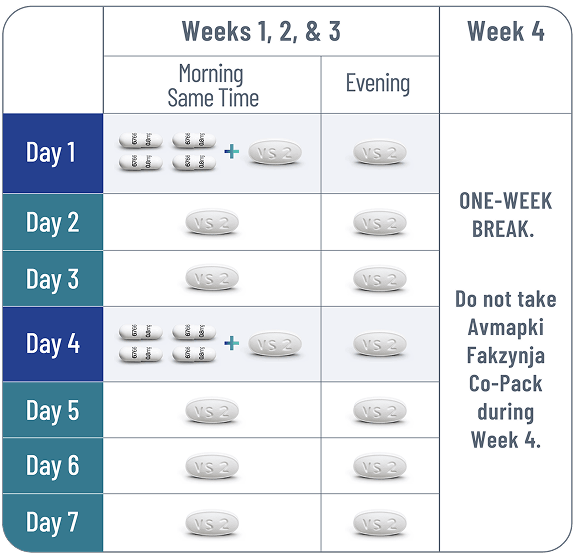
Product images shown are not actual size.
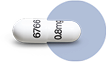
Avmapki: 4 capsules (3.2 mg) = 1 dose
- On Weeks 1, 2, and 3, take 3.2 mg (4 capsules) on Day 1 and Day 4
- On Week 4, take a one-week break
- Take each dose at the same time with food
- Swallow the capsules whole. Do not chew, break, or open the capsules
- Keep refrigerated in original bottle

Fakzynja: 1 tablet (200 mg) = 1 dose
- On Weeks 1, 2, and 3, take 200 mg (1 tablet) 2 times a day
- On Week 4, take a one-week break
- Take with food
- Swallow the tablets whole. Do not chew, break, or crush the tablets
- Keep refrigerated in original bottle
Take Avmapki Fakzynja Co‑Pack exactly as your healthcare provider tells you to, and do not change your dose or stop taking it without talking to your healthcare provider. If you develop certain side effects, your healthcare provider may change your dose, temporarily stop treatment, or completely stop treatment.
If you take antacids, make sure you take Fakzynja tablets 2 hours before or 2 hours after taking the antacid. Tell your healthcare provider about all of the medicines you take, including prescription and over-the-counter medications.
If you miss a dose of Avmapki by more than 24 hours, skip the missed dose and take the next scheduled dose as prescribed by your healthcare provider. Do not take two doses at the same time to make up for a missed dose.
If you miss a dose of Fakzynja by more than 6 hours, skip the missed dose and take the next scheduled dose as prescribed by your healthcare provider. Do not take two doses at the same time to make up for a missed dose.
If you vomit after taking Avmapki capsules or Fakzynja tablets, do not take an additional dose. Take the next scheduled dose as prescribed by your healthcare provider.
Yes, Avmapki Fakzynja Co‑Pack is approved as a combination therapy. While there is a different dosing schedule for each of the two medications in Avmapki Fakzynja Co‑Pack, you will take both of them during the same treatment cycle. For more information, please see the dosing calendar.
Limit your time in the sun. Avmapki Fakzynja Co‑Pack can make your skin sensitive to the sun and the light from sunlamps and tanning beds, which means you may burn more easily and get a severe sunburn, so be sure to apply daily sunscreen with a Sun Protection Factor (SPF) of 30 or more. Wear a hat and clothes that cover your skin to protect against sunburn. Tell your healthcare provider if you get a sunburn.
Safety and side effect FAQs
Avmapki Fakzynja Co‑Pack may cause serious side effects, including:
- Eye problems. Eye problems are common with Avmapki Fakzynja Co‑Pack and can be severe. Your healthcare provider will send you to see an eye care professional before starting treatment, during treatment, and for any new or worsening eye problems. Tell your healthcare provider if you get any new or worsening eye problems including:
- changes in vision, such as blurred vision, double vision, or vision loss
- dry eye(s)
- eye and eyelid inflammation, including redness, swelling, and itching
- eye pain
- new or increased floaters (small dark spots or squiggly lines that float across your vision)
- light hurting eyes or seeing flashes of light
- Severe skin reactions. Skin reactions are common with Avmapki Fakzynja Co‑Pack and can be severe or life threatening. Tell your healthcare provider if you develop any new or worsening skin reactions including:
- skin rash or acne
- dry skin
- itching
- blisters on your skin
- redness or swelling of your face, hands, or soles of your feet
- blisters or sores in your mouth
- peeling of your skin
- skin infection
- Liver problems. Liver problems are common with Avmapki Fakzynja Co‑Pack and can be severe. Treatment with Avmapki Fakzynja Co‑Pack can increase the level of aspartate aminotransferase, alanine aminotransferase, and bilirubin in your blood. Your healthcare provider will do blood tests before starting each treatment cycle and during treatment to check your liver function. Tell your healthcare provider if you get any signs and symptoms of severe liver problems including:
- yellowing of your skin or the white part of your eyes
- itchy skin
- feeling very tired
- flu-like symptoms
- nausea or vomiting
- upper right side stomach pain
- dark or tea colored urine
- bleeding or bruising more easily than normal.
- Muscle problems (rhabdomyolysis). Avmapki Fakzynja Co‑Pack may cause muscle problems that can be severe. Treatment with Avmapki Fakzynja Co‑Pack can increase the level of an enzyme in your blood called creatine phosphokinase (CPK) and can be a sign of muscle damage. Your healthcare provider will perform blood tests to check your levels of CPK before starting each treatment cycle and during treatment. Tell your healthcare provider if you get any signs or symptoms of increased CPK including:
- weakness or difficulty moving arms and legs
- muscle or bone aches or pain that does not go away
- dark, red colored urine or decreased urine output.
The most common side effects of Avmapki Fakzynja Co‑Pack include:
- nausea
- tiredness
- increased aspartate aminotransferase
- diarrhea
- swelling in the body (edema)
- decreased hemoglobin
- increased alanine aminotransferase
- vomiting
- increased blood bilirubin
- increased triglycerides
- stomach-area pain
- acid reflux
- increased alkaline phosphatase
- decreased platelets
- constipation
- shortness of breath
- cough
- urinary tract infection
- decreased lymphocytes
- decreased neutrophils
- proteinuria
Most people were able to manage side effects, with the help of their healthcare provider, by making treatment adjustments.
These are not all of the possible side effects of Avmapki Fakzynja Co‑Pack. Call your doctor for medical advice about side effects.
Tell your healthcare provider if you have any side effect that bothers you or that does not go away. Call your healthcare provider for medical advice about managing side effects.
Avmapki Fakzynja Co‑Pack may cause fertility problems in females and males, which may affect your ability to have children. If this is a concern for you, be sure to talk to your healthcare provider. Avmapki Fakzynja Co‑Pack can harm your unborn baby.
Females who are able to become pregnant:
- Your healthcare provider should do a pregnancy test before you start treatment with Avmapki Fakzynja Co‑Pack.
- You should use effective birth control (contraception) during treatment and for 1 month after the last dose of Avmapki Fakzynja Co‑Pack.
- Tell your healthcare provider right away if you become pregnant or think you may be pregnant during treatment with Avmapki Fakzynja Co‑Pack.
Males with a female partner who is able to become pregnant:
- You should use effective birth control (contraception) during treatment and for 4 months after the last dose of Avmapki Fakzynja Co‑Pack.
It is not known if Avmapki Fakzynja Co‑Pack passes into your breast milk. Do not breastfeed during treatment and for 2 weeks after the last dose of Avmapki Fakzynja Co‑Pack.

Get support with Verastem Cares™
Learn how Verastem Cares™ can help you access Avmapki Fakzynja Co‑Pack as prescribed by your healthcare provider.

Support Programs
Regardless of what insurance you have, or if you have no insurance at all, Verastem Cares™ has programs to support you.

Insurance Provider Assistance
Verastem Cares™ will work with your healthcare provider to help you get access to treatment.

Educational Resources
We can share resources to help you better understand Avmapki Fakzynja Co‑Pack.
Call us at the number below
Our dedicated team is here to help
Phone: 866-351-8372
8AM-8PM ET Monday – Friday

EXPLORE THE CLINICAL TRIAL RESULTS
Discover how women responded to Avmapki Fakzynja Co‑Pack.


STAY INFORMED
Receive information and resources to help support you on your treatment journey.